
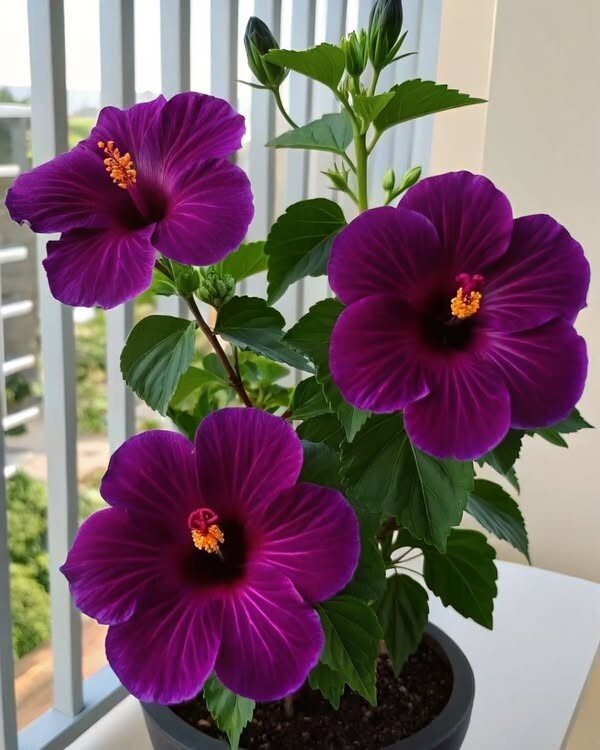
. Northern States (Zones 3-6)
Best Varieties: ‘Purple Pillar’, ‘Midnight Marvel’, ‘Berry Awesome’
. These hardy perennial varieties die back in winter but return stronger each spring
. Plant in late spring after last frost
. Mulch heavily for winter protection
. Southern States (Zones 7-11)
Best Varieties: ‘Purple Satin’, ‘Lavender Chiffon’, plus tropical varieties
. Can grow both hardy perennials and tropical hibiscus
. Plant nearly year-round, avoiding extreme summer heat
. Provide afternoon shade in zones 9-11
. Western States (Zones vary)
Desert Southwest: Choose heat-tolerant varieties, provide afternoon shade Pacific Coast: Most varieties thrive with consistent moisture Mountain West: Stick with hardiest varieties, protect from late frosts
The Step-by-Step Planting Guide That Actually Works
Site Selection: Location Makes or Breaks Success
Choose a spot that receives 6-8 hours of morning sun with some afternoon protection. Purple hibiscus loves consistent moisture but despises wet feet, so ensure good drainage.
Pro Tip: Plant near a patio or window where you’ll see the blooms daily – you’ve earned the right to enjoy your handiwork!
Soil Preparation: The Foundation of Success
1. Test your soil pH – hibiscus prefers slightly acidic to neutral (6.0-7.0)
2. Improve drainage by adding compost or aged manure
3. Create a planting hole twice as wide as the root ball but no deeper
4. Mix in slow-release fertilizer at planting time
Planting Timeline
. Spring planting: 2-3 weeks after last frost (ideal for most regions)
. Fall planting: 6-8 weeks before first frost (zones 7-9 only)
. Container planting: Any time during growing season
Time-Saving Maintenance That Busy Gardeners Love
. The 15-Minute Weekly Routine
Week 1: Deep watering (1-2 inches total) Week 2: Quick deadheading and inspection Week 3: Light fertilizing during growing season Week 4: Mulch check and weed removal
Smart Watering Strategies
. Morning watering: Reduces disease risk and water loss
. Drip irrigation or soaker hoses: Set-and-forget convenience
. Mulch magic: 2-3 inches of organic mulch cuts watering needs in half
Fertilizing Made Simple
. Spring: Apply balanced slow-release fertilizer (10-10-10)
. Mid-summer: Side-dress with compost or liquid fertilizer
. Fall: Stop fertilizing 6-8 weeks before first frost
Troubleshooting Common Purple Hibiscus Problems
Problem: Buds Dropping Before Opening
Causes: Inconsistent watering, transplant shock, temperature stress Solutions: Maintain consistent soil moisture, avoid moving established plants, provide afternoon shade during heat waves
Problem: Leaves Turning Yellow
Causes: Overwatering, underwatering, nutrient deficiency Solutions: Check soil moisture regularly, ensure good drainage, apply balanced fertilizer
Problem: Few or No Blooms
Causes: Too much nitrogen, insufficient sunlight, late-season planting Solutions: Switch to low-nitrogen fertilizer, ensure 6+ hours of sun, be patient with first-year plants
Problem: Aphids or Spider Mites
Causes: Stressed plants, hot dry conditions Solutions: Improve air circulation, regular watering, beneficial insects, insecticidal soap for severe infestations
