
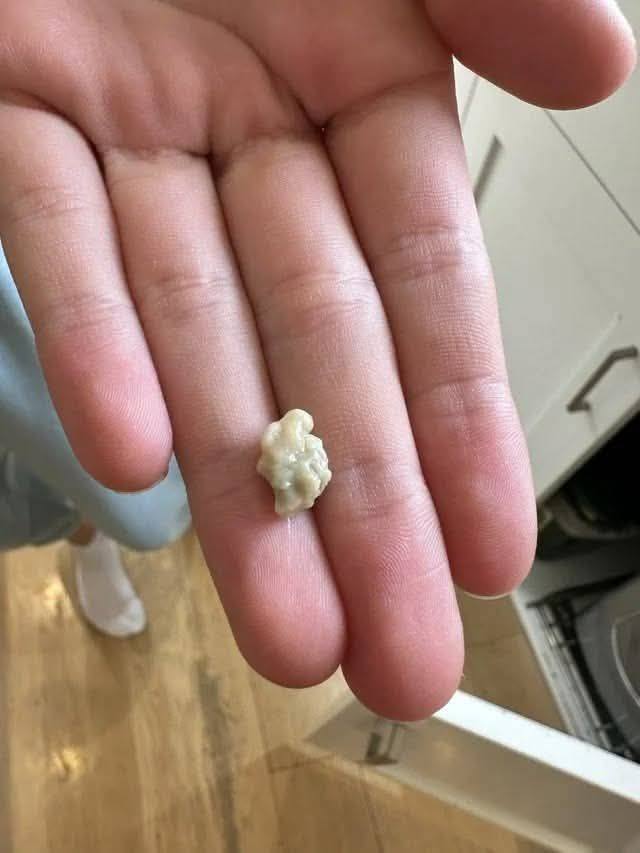
Trapped food particles
Dead white blood cells
Bacteria
Hardened saliva and mucus
Calcium and other minerals (which make them firm or chalky)
Over time, these materials calcify — creating a hard, crumbly lump that can range from pinpoint size to pea-sized.
✅ They’re not infections — but they can contribute to bad breath.
🔍 How Common Are Tonsil Stones?
About 10% of people experience them at some point — though some studies suggest the number could be higher
More common in people with large or deeply pitted tonsils
Often go unnoticed — many people don’t even know they have them
✅ They’re not a sign of poor hygiene — just anatomy and daily living.
🚩 Common Symptoms
Most tonsil stones are small and symptom-free — but larger ones can cause:
Bad breath (halitosis)
Strong, sulfur-like odor (like rotten eggs)
Sore throat or irritation
Scratchy or “something stuck” feeling
Difficulty swallowing
If stone is large
Ear pain
Referred pain from shared nerves
Visible white/yellow lumps
On or near the tonsils
✅ Most people only notice them when they see them in the mirror or cough them up.
🧫 What Causes Tonsil Stones?
Tonsil stones form when debris gets trapped in the tonsillar crypts (natural pockets in the tonsils) and hardens over time.
Risk Factors:
